We accept
Medicare Advantage plans to fit your dental needs.
Medicare Advantage plans to fit your dental needs.

November is Mouth Cancer Action Month in the United States. It is a time to spread awareness about this life-threatening yet highly preventable disease and reduce the number of cases of oral cancers and mortalities from it in this country. With that in mind, we at Saw Mill Dental offer this primer on mouth cancers.
Oral cavity cancer, also known as just oral cancer or mouth cancer, tends to develop on the:
It can first appear, however, on the:
Not all growths or tumors appearing in the mouth are cancerous. Some may be benign (non-cancerous) or precancerous, which means they may or may not become cancerous.
Two of the most common risk factors for oral cancer are smoking and drinking. More specifically:
Other known risk factors for oral cancer include:
You can help to prevent oral cancer by minimizing your risks of developing it. While you can’t do much about your gender, age and genes, there are certain lifestyle factors you can affect to help protect yourself from oral cancer.
Quit or avoid smoking tobacco or using smokeless tobacco, and limit your drinking of alcohol. Limit your exposure to the sun as well, making sure to use an appropriate UV sunblock when you are exposed to the sun. Eat a well-rounded, nutrient-rich diet that includes plenty of fruits and vegetables.
If you wear dentures, take them out each night, clean them on a daily basis and get the checked by a dentist every five years at least.
Even following these guidelines, oral cancer is still possible. In fact, over a fourth of people diagnosed with mouth cancer don’t use tobacco or consume alcohol. Therefore, the only way to prevent oral cancer from taking hold is to detect it as early as possible. Call us today to see a Yonkers dentist for an oral cancer screening.
In an oral cancer screening, your dentist will feel around inside and outside your mouth and around your head, neck and jaw for any lumps, growths, thickening, or masses. Your dentist will also look around closely inside your mouth–including your lips, cheeks, gums, tongue, roof and floor of the mouth and throat–for red, white or red and white speckled patches; sores you’ve had for more than two weeks; bad breath; or loose teeth. If you wear dentures, the dentist may also look for a poor fit. If you’ve lost weight without explanation, the dentist may also weigh this as a possible warning sign.
While you should have your dentist conduct an oral cancer screening every year, you can also conduct one on yourself every month. Your oral cancer self-exam won’t be as thorough or experienced as an oral cancer screening your dentist gives you, but it can alert you to potential problems or changes worth bringing to your dentist’s attention.
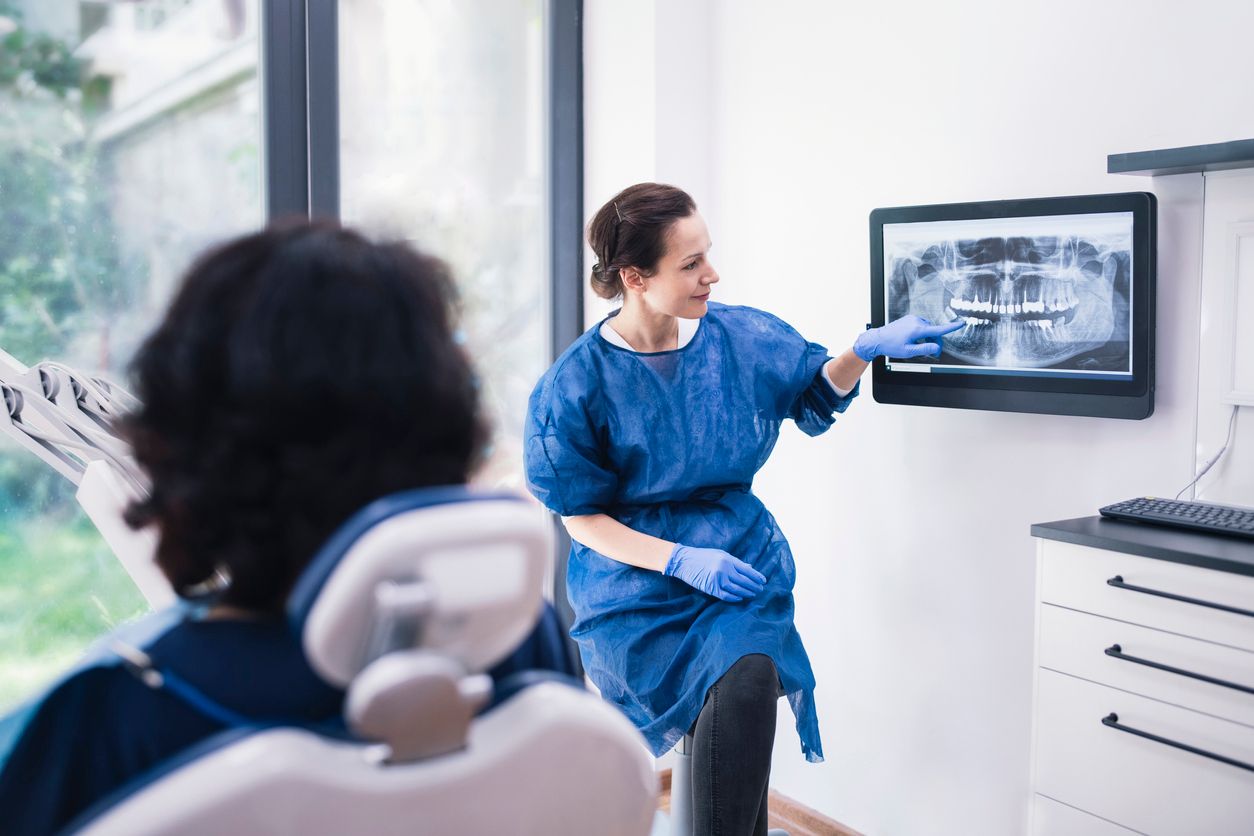
If your dentist notices anything during an oral cancer exam or routine checkup that gives him or her cause for concern, he or she may order a biopsy of the area to check if cancer is present. Depending on certain variables, this biopsy may be performed with a brush, incision or laser or it may be conducted using dye or a special kind of light. Your dentist may also or alternatively order an imaging test like a dental or chest X-ray, MRI, CT scan or PET scan, ultrasound or endoscopy.
Once oral cancer is identified, the next step is for the dentist to stage it. By knowing what stage of oral cancer a patient has, the dentist and the rest of the care team have a better idea of what type and extent of treatment is needed.
To figure out, implement and monitor the best course of treatment for your oral cancer, you and your dentist will put together a team of oral cancer specialists. This may include a head and neck surgeon, an ENT (ear, nose and throat doctor) and oncologist, speech, physical and occupational therapists, reconstructive or plastic surgeon and dietician, among others. Possible treatments your team may consider for you include chemotherapy, radiation therapy, immunotherapy, targeted therapy and surgery.