We accept
Medicare Advantage plans to fit your dental needs.
Medicare Advantage plans to fit your dental needs.

The American Sleep Apnea Association estimates 22 million Americans suffer from sleep apnea. Up to 80 percent of the moderate and severe cases are undiagnosed, which makes understanding the risk factors and recognizing the symptoms extremely important, especially if you experience persistent drowsiness or other symptoms. Keep reading to learn the risk factors, symptoms and how dentists can treat sleep apnea.
Obstructive sleep apnea is the more common form of sleep apnea. OSA occurs when your airway becomes fully or partially blocked. Your body will work extra hard to force air past the soft tissue in the back of your throat, causing pauses in your breathing that last for up to 20 seconds. Once your reflexes kick in, you will start breathing again. You'll wake up when this happens but so briefly, you won't remember it.
With central sleep apnea, the brain fails to tell the body to breathe. It is a neurological problem which is less common than OSA, but just as dangerous. CSA is associated with strokes, kidney failure, and heart failure.
Complex sleep apnea is a combination of OSA and central sleep apnea. It used to be called treatment-emergent central apnea. It's usually diagnosed after someone has OSA and once the obstruction is cleared, the apnea events continue.
Anyone, at any age, can develop OSA, but certain individuals are more likely to be diagnosed with it. Common causes and risk factors for OSA include:
Common signs you have sleep apnea include:
As we all know at this point in our lives, good sleep quality is essential to a healthy heart. Untreated OSA may increase your risk of heart attacks, high blood pressure, stroke, depression and diabetes. Untreated sleep apnea will also leave you with daytime tiredness, which can lead to motor vehicle accidents or accidents at work involving potentially dangerous machinery.
If you have untreated OSA, you're likely to experience daytime sleepiness, trouble concentrating and a general lack of energy. This can affect your professional and social life. Your performance at work may suffer and you may find you lack the drive to participate in sports or outdoor activities with family and friends.
First, you need an official diagnosis after having a sleep study. You can ask your dentist where to find a sleep center near you. You can have a sleep study done there, or possibly in your own home. Once you have an official diagnosis, you can choose the best treatment option for you.
Mild sleep apnea can be treated with weight loss, stopping smoking and changing your sleeping position. Mild sleep apnea is when you have between five and 14 apnea incidents per hour. Otherwise, one of the two following options is usually recommended.
Continuous Positive Airway Pressure (CPAP) machines push air into your nose or mouth while you sleep to keep your airway open. You wear a mask hooked up to a machine via a hose. Some people feel slightly claustrophobic wearing a mask or they are bothered by the noise the machine makes. Skin irritation and nosebleeds are other problems people complain of which keep them from using their machine each night.
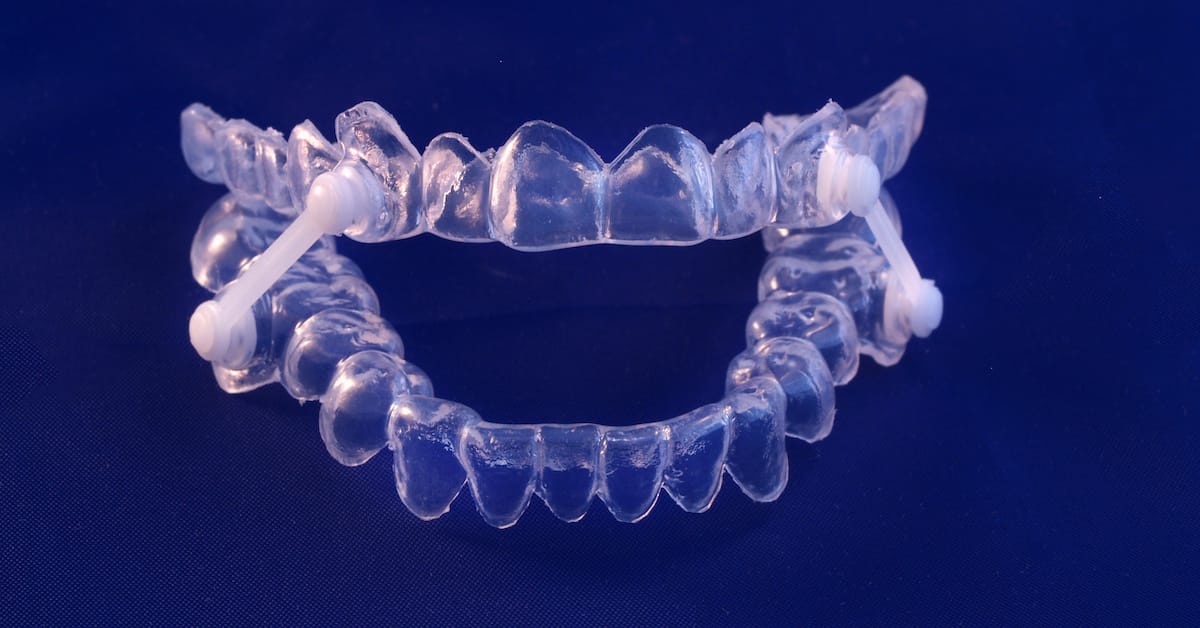
One of our dentists can design an oral appliance to treat your OSA, which will be made to fit your mouth perfectly. It resembles an orthodontic retainer or sports mouth guard with hinges. The appliance pushes your lower jaw forward slightly, which keeps your airway open. Oral appliances are comfortable and highly portable, which makes it convenient if you frequently travel. They also don't require electricity like CPAP machines, so you can take them camping or anywhere with you.
It's possible to buy an oral appliance to treat OSA online or at your local drugstore. We advise our patients to choose a made-to-order oral appliance from a dentist. There isn't any generic device that is truly a one-size-fits-all option as everyone has different size mouths. Also, oral appliances work by pushing the lower jaw forward and you want a dental professional to adjust it properly so it is safe and won't cause tooth shifting.
You deserve the same boundless energy after eight hours sleep your friends and colleagues at work enjoy. Call us for a comprehensive exam if you suspect you have OSA. Our experienced team can help you get a diagnosis and then the treatment you need to get a good night's sleep once again. A dentist can create a custom sleep apnea oral appliance for you which will be very comfortable. Please call us today for more information.